Pros Know

Engineered Outperforms Open Web

When it comes to floor joists, professionals know that engineered and precision-manufactured solutions like BCI® and AJS® joists outperform solid sawn open web floor trusses (OWFT) by almost any measure.

Let’s look at the common myths vs. reality

Myth

Engineered I-joists make running HVAC, plumbing & wiring harder

1

Reality

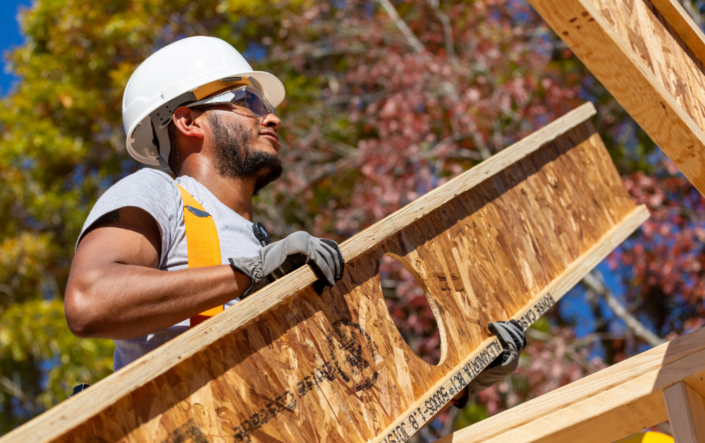
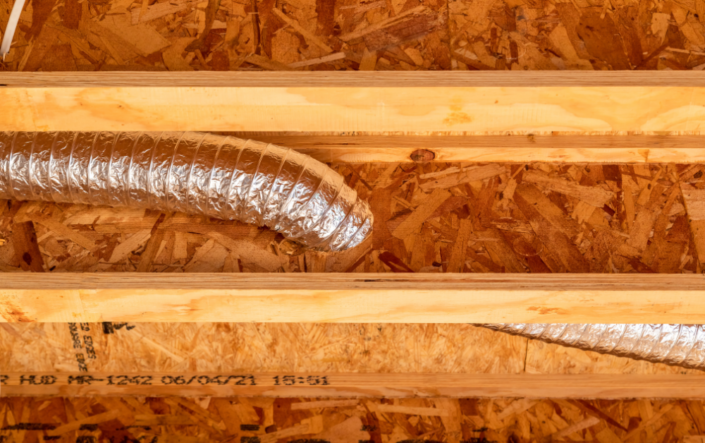
BCI and AJS joists can easily have holes cut in the web (up to 22” rounded rectangular) or punch-outs removed, making running HVAC, plumbing & wiring quick and simple for the trades in most applications.
Pros know

BCI Joists Have Room to Run

Myth

The manufacturing process for engineered I-joists and OWFT are similar

2

Reality

Engineered I-joists like BCI and AJS joists are designed and built to exact manufacturing standards — and are also subject to rigorous testing to ensure high-quality standards are always met. Each joist is tested before shipping. The result is that BCI Joists are consistently strong, durable, and flat floors. You won’t get this from open web floor trusses.

Pros know

Predictable Performance Adds Value

Myth

Engineered I-joists and OWFT perform at about the same level

3

Reality

Due to the strict manufacturing process and strict engineered values, BCI and AJS joists provide measurable performance. This information is used in the BC FloorValue software to analyze and design floors to help ensure they meet customer expectations. This results in stable, sturdy, and quiet floors — no more bounce or rattling dishes in the cabinet as you walk by.

Pros know

Quality Construction = Happy Customers

Myth

Engineered I-Joists and OWFT install similarly

4

Reality

BCI Joists are engineered and manufactured so they’re lighter, easier to handle and field-trimmable without sacrificing strength. Their factory-controlled consistency ensures uniform installation. In contrast, open web trusses are heavy, can vary by build with larger crews, and more time is needed to ensure point loads and bearings are in-line floor to ceiling.

Pros know

The True Price Includes More Than Materials

Myth

All manufacturers stand behind their products

5

Reality

Do open web trusses come with a warranty? Good question. Typically not. BCI and AJS joists, on the other hand, always include a straightforward, industry-leading limited lifetime warranty backed by a company with more than 60 years of experience
Pros know

A Better Warranty Signals a Better Product

Floor System FAQs: I-Joists vs. Floor Trusses

Choosing the right floor system impacts everything from installation speed to long-term performance. Here’s how Boise Cascade® BCI® and AJS Joists compare to Floor Trusses across key factors like cost, flexibility, and code compliance.

What is a truss?

In residential construction, a truss is a prefabricated framework for roofs or floors. They are often made from wood and used to support loads by transferring weight through interconnected triangular units.

How do floor trusses and roof trusses differ?

In single-family and multifamily projects, floor trusses are designed to span between walls or beams to carry the weight of people, furniture, and appliances across each level of the building. Roof trusses are engineered to support roofing materials and handle loads like snow, wind, and the roof’s own weight. Each type is built to meet its specific structural role and cannot be placed elsewhere.

What are floor trusses made of?

Floor trusses are made from two horizontal members (called chords) with a triangular or webbed pattern of diagonal and vertical members connecting them. These components are usually made from dimensional lumber.

What are open web floor trusses?

Sometimes called plated floor trusses, open web trusses are built using dimensional lumber connected with metal connector plates. In single-family and multifamily projects, plated floor trusses are often used. However, they typically require longer lead times, more on-site labor, and specialized handling compared to engineered I-joists.

What makes I-joists easier to install than trusses?

BCI Joists weigh about one-third less than floor trusses. Their lighter weight allows for installation without a crane and fewer people. There also isn’t a top or bottom orientation for I-joists, which simplifies placement. Floor trusses have specified top and bottom chords for installation. (BCI joists are light but mighty)

Are I-joists field-trimmable?

Yes. BCI Joists are field trimmable, making on-site adjustments easier. Floor trusses typically are not designed to be trimmed in the field. If modifications are needed, often a new open web joist must be made, potentially slowing construction and adding to the overall cost.

How do these systems handle fire protection requirements?

BCI Joists have published floor assemblies that meet the 2015 IRC 302.13 fire protection standards. Floor trusses are also required to meet IRC 302.13, but there are no exceptions for trusses or I-joists—only for dimensional lumber 2×10 or larger. Draft stopping may also be required every 1,000 sq. ft. when using trusses.

Does either system require additional bracing?

Floor trusses often need bracing or strongbacks at mid-span, adding 2–3% to the cost. BCI Joists generally do not need additional support under standard loading.

Do I-joists and trusses require bearing support?

BCI Joists can use a full-depth rim board at the end bearing, eliminating the need for extra blocking. Ribbon boards used with floor trusses do not provide a direct lateral load transfer path; trusses often needblocking or a rim board, depending on local code and wall bracing needs. This is especially needed in higher lateral load areas.

How does the depth of each system affect my design?

Floor trusses are often deeper than BCI Joists. BCI Joists often achieve similar spans with shallower depths, allowing more design flexibility, especially in elevation-sensitive projects. It’s important to remember that BCI joists are available in depths from 9 ½” to 24”, creating a wide variety of options to meet a project’s structural, spans, and design criteria.

How do costs compare?

Floor truss costs can fluctuate with lumber markets and are priced per job. BCI Joist pricing tends to be more stable because of controlled manufacturing processes and a stable supply chain of raw materials for engineered wood products. Costs vary by project, but often open web floor trusses cost more. Their prices can fluctuate with lumber market volatility and can make pricing jobs more challenging. BCI Joists, however, offer a predictable price since engineered wood products rely on controlled manufacturing processes and stable supply chain of consistent raw-material inputs — not the fluctuating commodity lumber market.

Can I-joists be repaired or modified on-site?

Yes. BCI Joists can allow field modifications and quick repairs, helping projects stay on schedule. If trusses are not installed correctly or missized, new trusses will need to be made, which leads to delays.

Which system performs better over time?

BCI Joists are dimensionally stable, offering predictable performance and are precision-manufactured with specific moisture content, all of which helps eliminate movement and potential floor squeaks. All Boise Cascade products also come with a limited lifetime warranty.

How does HVAC access compare?

BCI Joists support multiple large openings and access points, allowing flexibility in duct layout and mechanical room placement. Floor trusses have multiple access points for routing mechanicals and their opening sizes change based on span and configuration. Floor trusses are often made with larger chases in the center to run large HVAC options, which limits layout options and may mean longer HVAC runs.

Is noise transfer a concern?

Yes, for Trusses. The open plenum can allow sound to travel between joists. BCI Joists reduce this issue as their webbing helps act as a sound barrier.

How easy is it to pass wiring and plumbing through floor trusses and I-joists?

Trusses use metal gusset plates, which can nick wires. BCI Joists do not use metal plates and come with pre-manufactured 1 ½″ knockouts for wiring and small plumbing runs. For larger plumbing and mechanicals, holes up to 22” can be easily cut into BCI joists.

Are engineering documents required for permits?

Trusses typically require engineer-sealed calculations, shop drawings, and full instructions for permits, per IBS 2303.4. BCI Joists do not. Their capacities are established under IRC Section R502.1.2 and ASTM D5055, and are validated through ICC-ES Evaluation Report ESR-1336—eliminating the need for additional engineer seals or calculations in most cases.

Are lead times consistent?

Floor trusses have to be designed and assembled for each job, which leads to longer lead times for jobsite delivery. BCI Joists are part of a stable supply chain, held in local inventory, providing quick and predictable delivery schedules often in as little as 24-48 hours.

Is there a warranty?

BCI Joists come with a limited lifetime warranty when installed per Boise Cascade guidelines. Trusses typically do not include a warranty for the builder or property owner.

Where to Buy

Loading...
Radius: KM
Find a Location - Click box below for list
Locations: 0 Back

Store Direction

Get Your Directions

Use my location to find the closest Service Provider near me