Products designed to handle the demands of construction, offering reliable strength and stiffness for longer spans, consistent quality, and better value. Tried and tested products and a strong limited lifetime warranty help provide peace of mind long after a project is complete.
Sustainable Forestry

Our Commitment
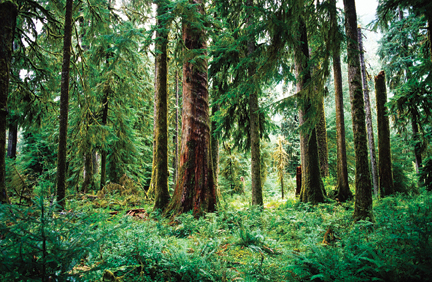
We rely on forests for timber to make our wood products and are committed to managing forests today in a way that means there will be an abundance of healthy, diverse forests in the future.
Healthy forests provide value to society in many ways. Trees help protect air and water quality, supply important habitat for wildlife, offer recreational opportunities, and provide forest industry careers as well as economic value.
Boise Cascade promotes biological diversity both individually and through cooperative efforts involving SFI State Implementation Committees, various State Natural Heritage programs, and other conservation organizations. We have assessed the presence of Forests with Exceptional Conservation Value (FECVs) that contain G1 (critically imperiled) and G2 (imperiled) species across our wood and fiber supply areas. We strive to continually update biodiversity assessments and provide regionally and locally appropriate information to our wood suppliers.
When conducting harvesting operations in forests that are known to contain FECVs, threatened and endangered species or rare plant communities, Boise Cascade is committed to complying with all applicable laws and regulations that protect these species and rare plant communities. Boise Cascade encourages all direct wood suppliers to complete state logger training programs that raise awareness of biodiversity.
Here are a few examples of how we promote biodiversity:
- Entered into biodiversity data license agreements with three state Natural Heritage programs.
- Financial support for research and field projects on populations of birds, bats, and pollinators in the Southern US and Pacific Northwest.
- Sharing Ecoregion G1 and G2 – FECV assessment information sheets with landowners and wood producers in WA and OR.
- Conducting pre-harvest meetings with logging contractors on all purchased stumpage tracts to review any known biodiversity impacts.
Because forests are vital resources to our planet as well as to our business, we are committed to sourcing wood from responsibly managed forests.
We do not own forestlands, but we take steps to assure our customers and consumers that we are legally and responsibly sourcing the wood we use. Our goal is to ensure all wood fiber: 1) comes from sources that are compliant with country, region and local regulations and laws, and 2) is harvested in a manner that balances the needs of the environment, wildlife, and surrounding communities.
Here are a few ways that the wood we procure meets our expectations for maintaining healthy forests:
- We have foresters on the ground in our wood basins who have extensive local knowledge of forestry operations and maintain strong relationships with suppliers.
- We maintain wood accounting data so we can track all sources of wood back to the county or forest district of origin.
Our suppliers must agree to rigorous contract requirements to provide legally harvested wood, which includes the protection of threatened and endangered species, and use loggers trained in responsible harvest practices. They must also ensure all voluntary and mandatory forestry National Association of State Foresters (NASF) Best Management Practices (BMPs) are followed during harvest to protect water quality.
Because our suppliers play an important role in allowing us to maintain our well-respected reputation, we expect them to conduct business in ways that align with our values and adhere to our Supplier Code of Conduct.
We partner with forestry industry experts to assess the environmental and social risks of our fiber supplier basins and procurement practices. One hundred percent (100%) of the wood procurement for our manufacturing locations is verified annually by a third-party to meet the requirements of the SFI Fiber Sourcing Standard.
Fiber tracking: We have systems in place track all primary and secondary fiber back to the district of origin. Our fiber supply agreements contain provisions that require all suppliers to provide forest source data. For all indirect fiber supplies, we have implemented an annual supplier audit process to monitor origin information and gather evidence of supplier tracking capabilities.
Understanding where all of our fiber originates is a responsibility that our foresters and purchasing agents for wood products take very seriously, and it is a key element of our due-diligence system.
We set expectations with our suppliers through communication of our procurement policy and comprehensive set of terms and conditions that are legally binding. Read more about our policies regarding Wood and Forest Based Product Procurement Policy.
Timber legality: Beyond our commitment to sustainable forestry practices for the wood used in our manufacturing operations, we apply those principles to our building materials distribution division as well. Our distribution centers routinely source secondary wood material from nearly 20 countries around the world. When doing so, we have an ongoing commitment to our goal of sourcing all wood-based products in compliance with the U.S. Lacey Act requirements for legal harvest and transportation of imported wood-based products.
Other ways we demonstrate our global commitment to legal and ethical forest practices is by contractually requiring all global suppliers to provide supplemental documentation (i.e. species, country of origin, forest certification information) in alignment with our policies and Supplier Code of Conduct.
We are committed to the continuous improvement of people, processes, and the quality of products that we deliver. Each of our business locations have autonomy to further these initiatives through using their knowledge and experience to solve problems, make decisions, and implement new ideas.
Boise Cascade is an active member in many national, regional, and local organizations that help us uphold our commitment to excellence when it comes to sustainability such as:
- National Association of State Foresters (NASF)
- The Nature Conservancy (TNC)
- Sustainable Forestry Initiative® (SFI®)
- American Wood Council (AWC)
We are a member in National Council of Air and Stream Improvement (NCASI), a leading forest product manufacturing and forestry research organization. Participation in NCASI gives us an avenue to proactively impact research initiatives that promote protection of threatened and endangered species, increased efficiency in wood utilization, responsible chemical practices in forestry operations, and many other areas critical to sustaining healthy forests.
Local procurement foresters actively participate in SFI® State Implementation Committees, which provide landowner outreach activities to promote educational tools and resources about forest best management practices.
We also participate in promoting education and training of logging and harvesting professionals in the U.S. The goals of the forest industry’s education program are to increase awareness and understanding of Best Management Practices, water quality protection, biodiversity enhancement, and protection of threatened and endangered species.
Boise Cascade utilizes an internal audit and management review process to evaluate the effectiveness of our Chain-of-Custody systems and drive continuous improvement.
Certifications - Wood Products
Boise Cascade® is committed to maintaining certification under the SFI®, PEFC, and FSC® standards, including provisions for product claims and use of registered trademarks, while adhering to applicable environmental, social, health, safety laws, and core labor requirements. To support this commitment, our Company has developed a Sustainable Forestry Policy, Wood Procurement Policy, and operational procedures to guide fiber procurement and chain of custody activities. Through annual management system reviews, internal audits, and third-party audits, Boise Cascade focuses on continual improvement of our forest certification programs.
Sustainable Forestry Initiative® (SFI®)
The Sustainable Forestry Initiative® (SFI®) is an independent, non-profit organization, who collaborates with a diverse network to help address local and global sustainability challenges. SFI works with the forest sector, brand owners, conservation groups, resource professionals, landowners, educators, local communities, Indigenous Peoples, governments, and universities.
All Boise Cascade Wood Products L.L.C. primary production facilities, sourcing wood fiber directly from the forest, are certified to the SFI 2022 Fiber Sourcing Standard and have implemented harvest monitoring programs to ensure Best Management Practices (BMPs) for soil and water quality are implemented.
All Boise Cascade Wood Products L.L.C. primary and secondary manufacturing facilities are certified to the SFI 2022 Chain of Custody Standard and have implemented an accounting system to track all fiber inputs, validate all materials originate from non-controversial sources, and offer a variety of output product claims and label options to our customers.
Find SFI certificates for our wood product manufacturing locations.
Forest Stewardship Council® (FSC®)
The Forest Stewardship Council® (FSC®) is a global, not-for-profit organization dedicated to the promotion of responsible forest management worldwide. FSC defines standards based on agreed principles for responsible forest stewardship that are supported by environmental, social, and economic stakeholders. To learn more, visit www.fsc.org.
Find FSC certificates for our wood product manufacturing locations.
Contact us for a list of our FSC Certified products at: https://www.bc.com/contact
Programme for the Endorsement of Forest Certification (PEFC)
All of Boise Cascade’s manufacturing facilities are certified to the Programme for the Endorsement of Forest Certification (PEFC) Chain-of-Custody standard, which has its own distinct set of procurement, tracking, and risk assessment steps. This is a global certification standard that is important to our customers who export their products to countries outside of North America.
Find PEFC certificates for our wood product manufacturing locations
-
Stronger Results
-
Software That's Smart
Operate smarter, stronger, and more efficiently. Boise Cascade’s integrated software suite equips projects with powerful, integrated tools for design optimization, estimating, take-offs and more, all supported by a dedicated software team.
-
Supporting Your Growth
Access a full range of products when you need, wherever you need it with Boise Cascade’s nationwide distribution network. Combined with product support from knowledgeable engineers, Boise Cascade helps provide the guidance and reliability needed to get the job done right.
Purpose & Values
Our values are not just words; they are the behaviors that we expect of each other and help us all share in a bigger purpose. We truly care about relationships with our teammates, customers, suppliers, shareholders, and the communities where we operate.

Our Environmental Policies
Our sustainability policies reflect our core value of integrity to do the right thing by preserving the environment for future generations. Learn more below.